
The Tyranny of Structurelessness in the Exam Room
Or: Why Narrative Medicine Still Needs a Spine
David E. McCarty, MD, FAASM & Ellen Stothard, PhD
~ ~ ~ ~ ~
22 April 2026
~ ~ ~ ~ ~
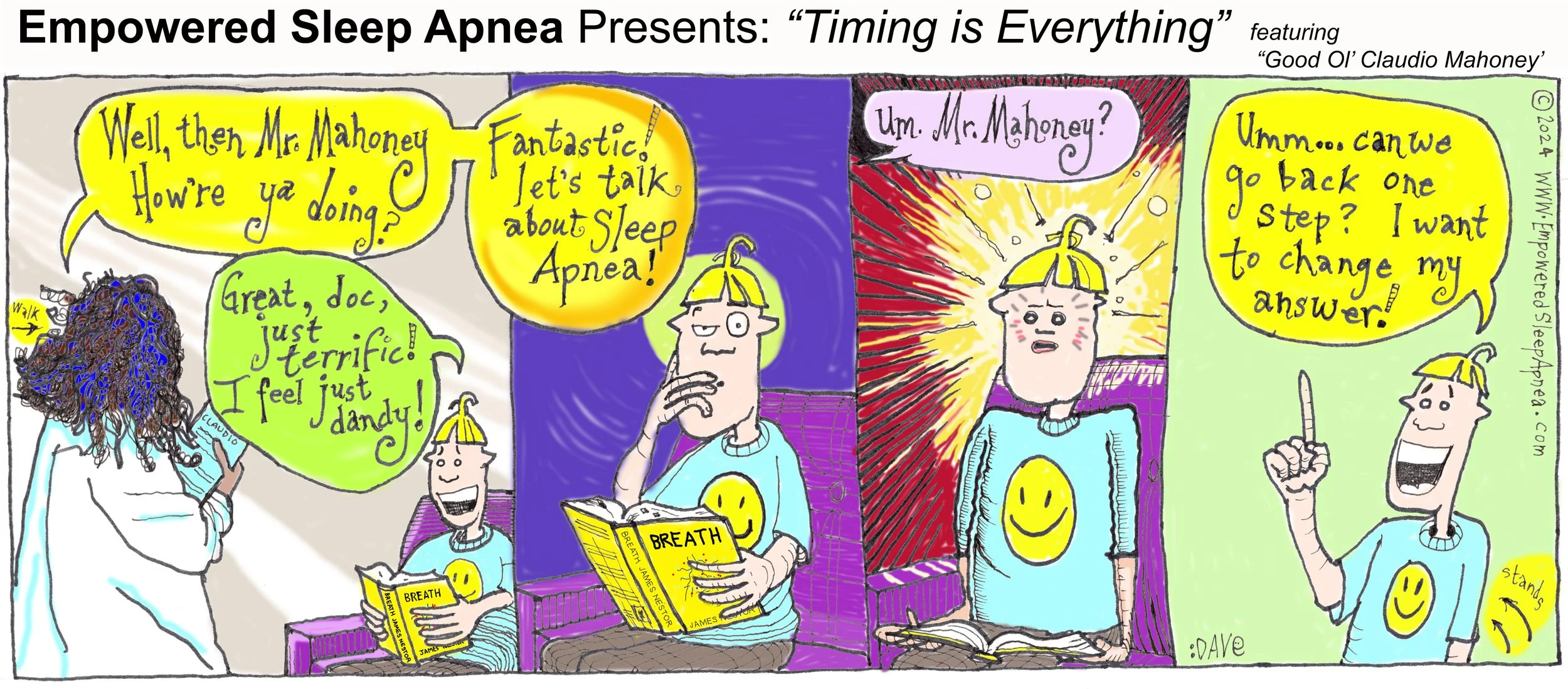
Narratives, man!! How we manage the discussion might make all the difference between connection…and something else!
~ ~ ~ ~ ~
A Necessary Development
For generations, physicians interrupted patients within seconds and reduced illness to lab values and diagnostic codes. “Narrative Medicine” emerged as a necessary corrective, and clinicians were urged to up their humanity game, listen more fully, and to treat patients as storytellers rather than specimens. Rita Charon called this narrative competence—the ability to recognize, absorb, and act on the stories of illness.[1]
The correction was overdue—and it mattered. It gave patients their voice back. In pushing back against over-structured, physician-dominated encounters, it’s even become possible to over-romanticize the unstructured visit. “Tell me everything,” we say, as if the very act drips with virtue. “Start wherever you’d like…” as if the absence of direction creates equality in some magical way.
Sorry to say it, folks: It does not. As we will discuss below, every correction creates its own blind spot.
~ ~ ~ ~ ~
The Tyranny of Structurelessness
We’ll start with this: there is no such thing as a structureless encounter.
In 1970, political scientist Jo Freeman published The Tyranny of Structurelessness. Her argument was as simple as it was unsettling: when groups reject formal structure in the name of equality, they do not eliminate power—they conceal it.[2] Informal hierarchies emerge; influence accrues to those who are the most fluent, forceful, and comfortable occupying space.
Worse yet, just like in top-down management systems, decisions still get made. The unsettling part: they just get made without transparency.
Turns out, the exam room is no different.
When a visit unfolds without clear framing—no shared agenda, no explicit decision points, no articulated goals—it does not become egalitarian. Emotional urgency sets priorities. The most compelling concern crowds out quieter ones. Time slips. Direction blurs. Decisions are made anyway, often implicitly, and often unevenly.
~ ~ ~ ~ ~
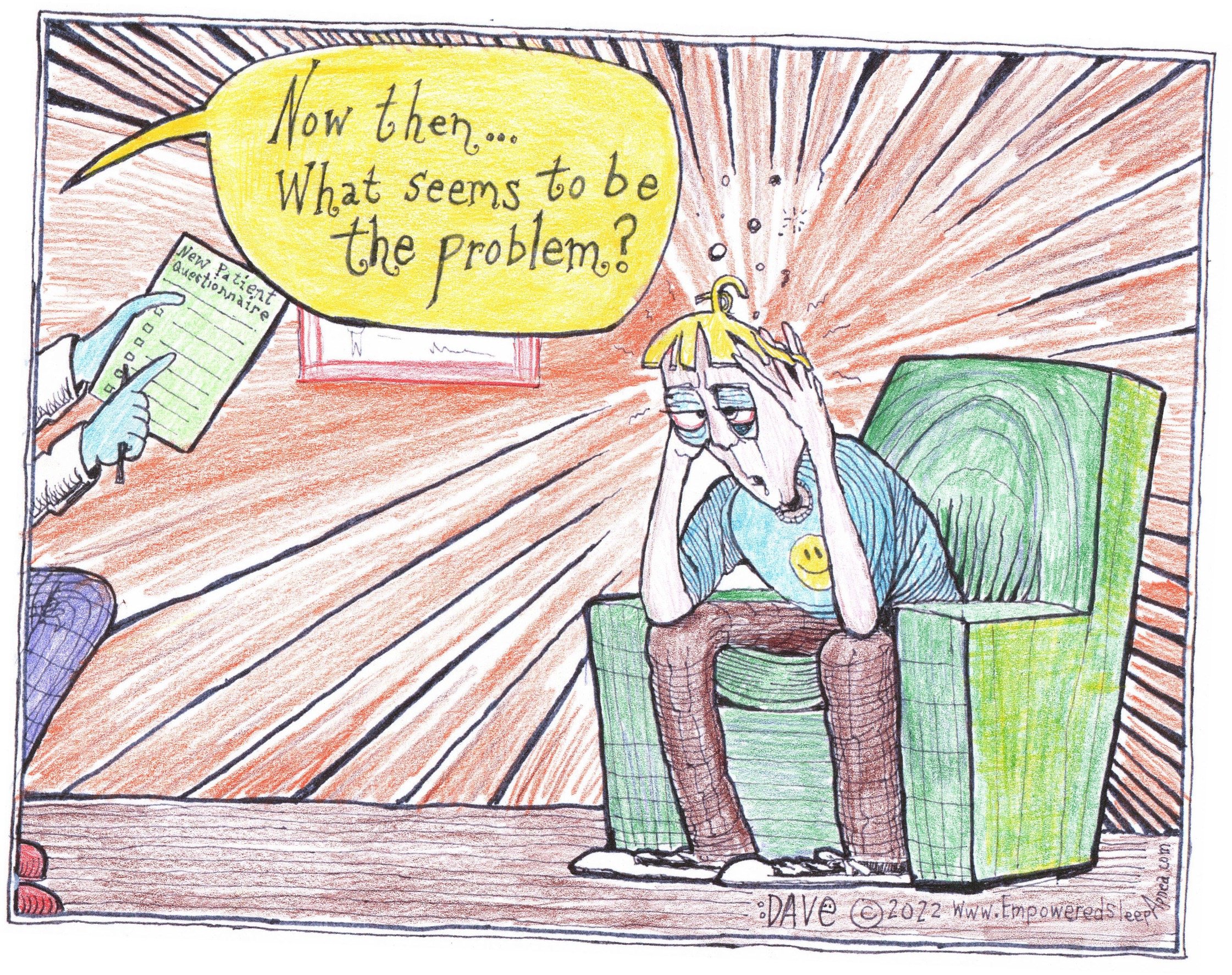
The Frustration of the Open-Ended Question: Where do I begin???
Enter: Autonomy and Justice
When structure dissolves, Freeman taught us that what disappears is not power, but transparency and accountability, making the situation arguably worse.
Philosophers now have a name for this problem when it goes bad: epistemic injustice. It occurs when someone’s ability to contribute knowledge is unfairly diminished, or when they lack the shared language to make sense of their own experience, and they end up getting overruled by the loudest voice in the room.
In medicine, that voice often comes preloaded—with training, hierarchy, and the authority of the diagnosis itself. The patient doesn’t have a chance.
Even in systems designed to prioritize “narrative”, the problem reveals itself quickly. Observational studies of narrative elicitation show that clinicians never truly stop organizing the encounter—they simply do it implicitly.[3] It’s the clinician who decides when to interrupt, which parts of the story matter, how to translate narrative into goals. These decisions are unavoidable. But without shared structure, they vary widely, shaped by individual style, time pressure, and bias.
Patients feel it too. Many default to broad, indistinct goals—“I just want to be healthy”—unless someone helps them go further.[3] More meaningful aims tend to emerge only when the clinician actively guides the conversation, asking follow-up questions, circling back, placing a frame around the story.
The point? “Narrative” alone does not reliably produce clarity. It needs structure to become clinically useful. See, when structure dissolves, it doesn’t leave a vacuum; it leaves whoever happens to be in the room, improvising at the speed of life...
How fast is that? Research has long shown that physicians interrupt patients quickly—often within the first half-minute of a visit.[4] Of course that pattern deserves critique, but Freeman taught us that the alternative is not abdication. Structured agenda-setting improves efficiency and patient satisfaction without diminishing empathy.[5]
Let’s say that again, for the churlish ones at the back of the class: Structure is not the enemy of listening. It is what makes listening equitable.
What, then, does structure mean in medicine?
It certainly doesn’t mean more bureaucracy, and it doesn’t mean rigid treatment algorithms.
At its best, the necessary “structure” is a shared set of questions that organize the process of iterative inquiry.
Most visits orbit three questions, whether we name them or not:
What is this? (what contributes to my perceived deviation from health?)
What else could this be? (are there other meaningful contributors?)
Why should we treat it? (what will I potentially receive from attempts to treat the problem we’ve named?)
Lived experience suggests that when these questions are not actively held in place, they tend to collapse into a single move: assigning a label and following an algorithm.
As William James warned, abstraction can become “a means of arrest far more than a means of advance in thought”[6], which is another way of saying that once you label something, you stop thinking about it.
Folks: a diagnosis is an abstraction—useful and powerful—but only when it points back to lived reality. When the name replaces the phenomenon it names, inquiry tends to stall.
This is where a subtle medical-decision-making error begins to take shape, a situation called diagnostic overshadowing.
~ ~ ~ ~ ~
Diagnostic Overshadowing, D’Aria, and the Five Finger Approach
Diagnostic overshadowing—the attribution of symptoms to an existing diagnosis rather than considering alternative explanations—is a well-described source of clinical harm, leading to misdiagnosis, delayed treatment, and poor outcomes.[7] In such cases, the label does not clarify the narrative; it consumes it.
Several years ago, one of us encountered a patient (who we’ll call D’Aria—not her real name) whose experience made this failure impossible to ignore.[8]
D’Aria had been followed in a sleep clinic for five years with a diagnosis of obstructive sleep apnea. The chart told a reassuring story: consistent CPAP use, no complaints, stable course. The notes were nearly identical year after year.
When asked directly, she reported wearing the device nightly.
When asked whether it helped, she paused.
“I don’t know,” she said.
Her symptoms—poor sleep and profound daytime sleepiness—had never improved. They had simply been carried forward beneath the diagnostic label known as “Sleep Apnea.”
When asked why she continued the therapy, she answered plainly:
“They told me I’d have a stroke if I didn’t.”[8]
Subsequent evaluation revealed the true diagnosis: narcolepsy.
For five years, her experience had been organized around a label that did not explain her symptoms and a treatment that didn’t offer much hope of doing her any good.
Nothing in the chart was technically incorrect.
And yet, something essential had been missed in the humane journey of this woman’s care.
Her story wasn’t absent…it had been rendered structurally inaccessible, hidden (as it was) beneath the label she’d collected.
This was not a failure of compassion. It was a failure of structure.
In complex chronic conditions—sleep disorders among them—this failure matters deeply. Diagnostic categories often reflect overlapping mechanisms across biological, behavioral, pharmacologic, and psychosocial domains.[9] A patient can carry a label for years while the underlying drivers of their symptoms shift.
Without deliberately asking, What else could this be?, care risks becoming irrelevant.
And once a diagnosis is made, treatment is often treated as inevitable.
Here, the third question becomes critical: Why should we treat it?
Risk reduction, symptom relief, relational impact, effects on other conditions, and quality of life are not interchangeable. Naming which one applies requires conversation. Without it, intervention becomes reflexive (based, of course, on the “label”) and, at times, misaligned with the patient’s lived experience.
In response to these challenges, structured approaches to clinical reasoning have been developed within sleep medicine. Years ago, one of us built a tool to keep the epistemic injustice shown in D’Aria’s case from happening again, and called it the Five Finger Approach. It’s designed as a structured and iterative method to ensure comprehensive evaluation across five domains: circadian factors, pharmacologic influences, medical conditions, psychiatric and psychosocial contributors, and primary sleep diagnoses.[9]
Its purpose is not to replace narrative, but to orient it. To give it structure.
By systematically scanning multiple domains, it resists premature diagnostic closure. By requiring explicit consideration of alternatives, it counters diagnostic overshadowing. By structuring inquiry around shared questions, it helps ensure that the patient’s experience can meaningfully inform clinical reasoning.
A companion framework, the Five Reasons to Treat, developed within the Empowered Sleep Apnea project, extends this structure across time—clarifying why treatment is being pursued and whether it is achieving its intended purpose.[10]
These are not algorithms. They are shared maps to allow sensemaking in a complex navigational environment. In other words: their purpose is not to constrain thought, but to keep it from collapsing.
What is this? What else could this be? Why should we treat it?
At last, we have a systemic way of approaching these three questions.
~ ~ ~ ~ ~
An Ethical Choice
Freeman argued that movements must eventually choose between covert power and accountable structure.[2]
Medicine faces the same choice.
Narrative medicine does not fail because it listens too much. It falters when listening loses its orientation.
Empathy without structure drifts. Structure without empathy dominates.
Structure around the right questions does something else, though.
It allows the patient’s voice to be heard, not just “documented consent.” It keeps alternatives visible. It makes reasoning transparent. It restores the possibility of shared understanding.
In that sense, structure is not merely a cognitive tool, but an ethical one.
Because without it, epistemic injustice is not an occasional error, but a predictable emergent property of the system.
The goal, of course, is not to control the narrative—that’s something each patient must discover the language to talk about, because each narrative is as unique as a fingerprint.
Our goal as a system is to ensure that each patient’s narrative can be understood, tested, and acted upon—without being lost, and without being overwritten.
In a healthcare system increasingly fragmented by metrics, algorithms, and institutional distrust, that may be one of the most meaningful forms of justice we can offer.
In the end, the goal isn’t just to name the problem. It’s to make sure we don’t lose the person who carries it.
Kind mojo,
Dave & Ellen
Longmont, Colorado
22 April 2026
David E. McCarty MD FAASM
Ellen Stothard, PhD
Co-Creators, Empowered Sleep Apnea project (www.EmpoweredSleepApnea.com)
Chief Medical Officer (Dave) & Chief Science Officer (Ellen), Rebis Health (www.RebisHealth.org).
References
Charon R. Narrative Medicine: A Model for Empathy, Reflection, Profession, and Trust. JAMA. 2001.
Freeman J. The Tyranny of Structurelessness. 1972.
Naldemirci Ö et al. The Potential and Pitfalls of Narrative Elicitation in Person-Centred Care. Health Expectations. 2020.
Marvel MK et al. Soliciting the Patient’s Agenda: Have We Improved? JAMA. 1999.
Elwyn G et al. Shared Decision Making: A Model for Clinical Practice. J Gen Intern Med. 2012.
James W. The Meaning of Truth. 1909.
Lazris A, Roth A. Diagnostic Overshadowing: When Cognitive Biases Can Harm Patients. Am Fam Physician. 2023.
McCarty DE. The Story About When D’Aria Embarrassed Her Doctors and Helped Invent The Five Finger Approach. Dave’s Notes. June 20, 2022. https://www.empoweredsleepapnea.com/daves-notes/the-story-about-when-daria-embarrassed-her-doctors-and-helped-invent-the-five-finger-approach
McCarty DE. Beyond Ockham’s Razor: Redefining Problem-Solving in Clinical Sleep Medicine Using a “Five-Finger” Approach. J Clin Sleep Med. 2010.
McCarty DE, Stothard E. Empowered Sleep Apnea: A Handbook for Patients and the People Who Care About Them. BookBaby Press, NJ; 2022.