
OR: “Ya got the Whole Fist in there, Doc?”
By David E. McCarty, MD, FAASM (…but you can call me Dave)
~ ~ ~ ~ ~
Thanksgiving Day, 2026
~ ~ ~ ~ ~
I'll give you five good reasons. One, two, three, four, FIVE!
— Lucy Van Pelt, curling her fingers, one by one, into a fist.
Charles M. Schulz, A Charlie Brown Christmas (1965).
~ ~ ~ ~ ~
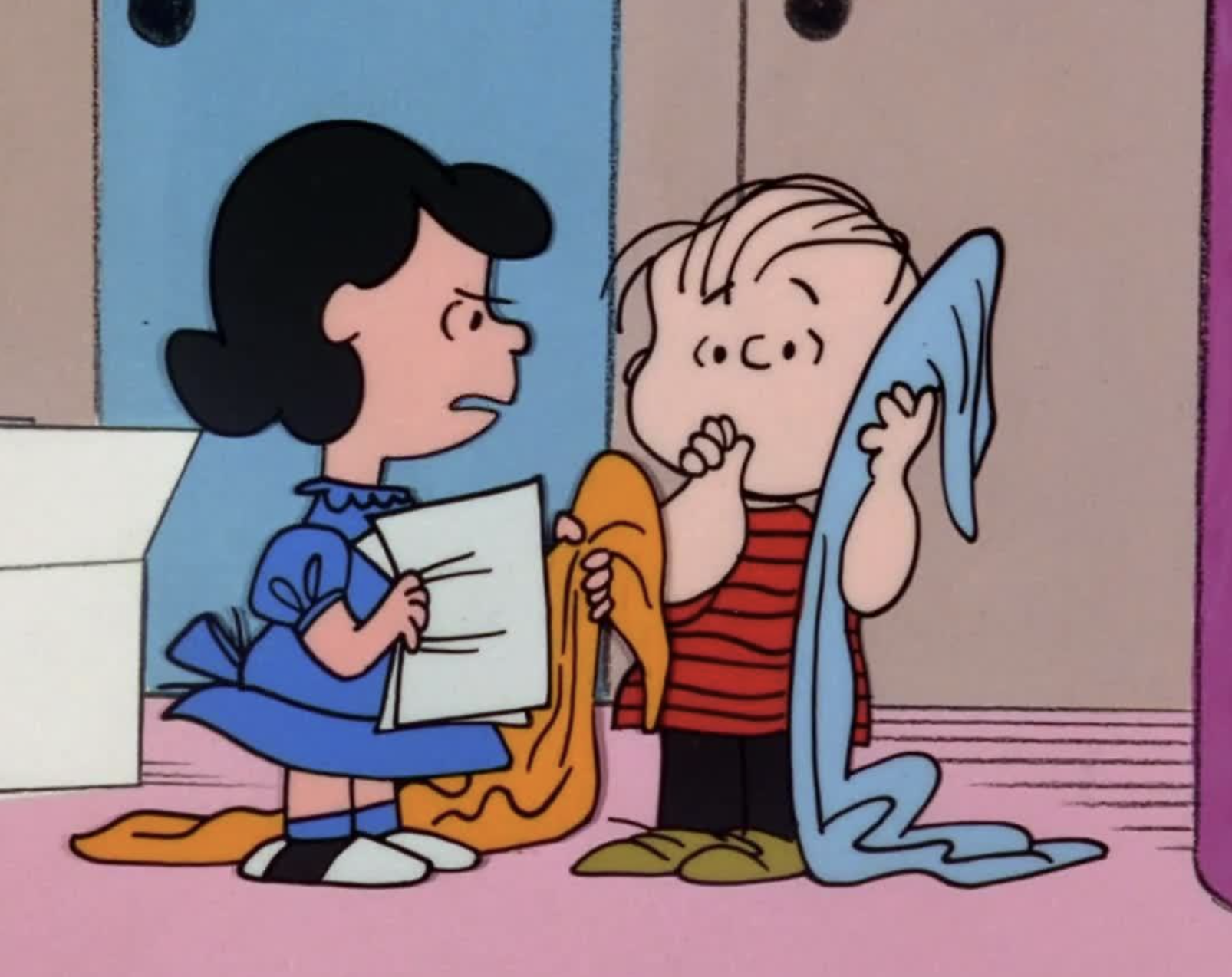
Lucy Van Pelt presents her five compelling arguments to Linus. Still from A Charlie Brown Christmas (1965), written by Charles M. Schulz and directed by Bill Melendez. Peanuts characters © Peanuts Worldwide LLC.
THE TAPE IS NOT THE ISSUE, DUDE
Somewhere along the way, we seem to have gotten ourselves into a rather spectacular argument about a piece of tape.
Social media influencers are selling it, the medical establishment is warning us about it, and everywhere you look, some athlete is posting a selfie, doing it TO WIN. Suddenly, we've got peer-reviewed scientific papers getting published about whether or not we should be putting it on our faces before we go to sleep.
Meanwhile, the more interesting question seems to have wandered out of the room, unnoticed.
Why are we breathing through our mouths in the first place?
A 2025 systematic review of the mouth-taping strategy raised legitimate concerns about the safety of blindly sealing the mouth during sleep, particularly in individuals with compromised nasal breathing. [1]
To this I say: fair enough, and no surprise! Closing somebody's emergency exit without first investigating why they're using it seems like a spectacularly bad idea. Fire Marshal Bill coulda told us that!
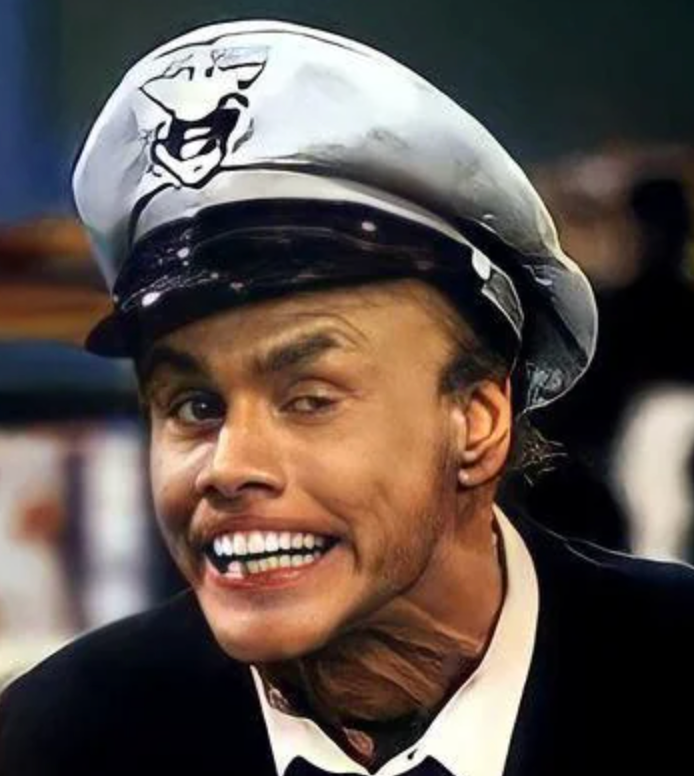
“Lemme show ya something!” Jim Carrey as Fire Marshal Bill Burns, In Living Color (Fox, 1990–1994). Produced by Ivory Way Productions and 20th Century Fox Television.
Yet…the failure of a particular therapeutic maneuver to garner sufficient scientific support should not be mistaken for the absence of a problem worth solving.
In other words, the TAPE is not the issue, Dude.
The BREATHING is.
More specifically, the POSTURE and PHYSIOLOGY of breathing are what we should be talking about…
Cue oscillating “dream-sequence” imagery, as we descend into the land of scientific curiosity…
~ ~ ~ ~ ~
Syndrome is as Syndrome Does…
Day before yesterday, the email prosperity gods sent me a 2023 review by AlDomyati and colleagues entitled An Overview of Mouth Breathing Syndrome and its Effect on Dental Development. [2] First thing that grabs me is the title…see, my DENTAL colleagues have coined name for something that we in Sleep Medicine often treat as little more than an inconvenience.
Mouth Breathing Syndrome. Nice to make your acquaintance!
Airway-aware dentists out there are exploring the notion that mouth breathing may not be all that great! For the mild-mannered sleep physician though, it might get no more than a hand-pat, and a reason to switch that person to an oro-nasal CPAP mask!
Same problem…our lens determines how we talk about it!
That’s why I felt it was time we developed a shared language for why this phenomenon ought to concern us. Seeing that it’s Thanksgiving and all, I’m heady with the culture of Christmas programming to come! Just like Lucy Van Pelt, I've got five reasons, and, as readers of Peanuts may recall, Lucy had a particularly memorable way of presenting five compelling arguments using the digits of one hand.
One reason by itself might be refutable…but all FIVE? They pack quite a punch!
So here they are, Life-Fans…the whole FIST IN THE MOUTH so to speak…a gobsmack of an essay for a very timely topic…why should we care about mouth breathing???
Let us count the ways…
~ ~ ~ ~ ~
ONE: BIOCHEMISTRY
Mouth breathing reshapes the oral microbiome and sidesteps the nose's nitric oxide delivery system…and the consequences may not stop at the mouth!
The human mouth is not merely a hole in the front of the head. It's a remarkably sophisticated biological ecosystem, populated by microorganisms, bathed in protective fluid that lubricates our tissues, buffers acids, facilitates remineralization of our teeth and participates in our defense against microbial pathogens. It’s a rainforest. It’s complex.
Now imagine running a fan across that ecosystem for eight hours every night, drying everything out. What happens to the organisms that live there? What happens to the chemistry taking place?
Choi and colleagues demonstrated that experimentally induced mouth breathing during sleep lowered intraoral pH. [3] Fan and colleagues identified differences in the microbial communities and salivary protein profiles of mouth-breathing children compared with their nasal-breathing counterparts. [4]
Face it, folks. Mouth-breathing changes the chemistry of a living ecosystem.
The potential consequences become particularly interesting when we consider the growing body of science connecting periodontal inflammation to systemic inflammatory disease. [5] Could chronic mouth breathing participate in that inflammatory journey? That's a question worth asking.
Meanwhile, there's another little biochemical miracle taking place just north of the mouth. Our paranasal sinuses manufacture nitric oxide (NO), a biologically active molecule that participates in antimicrobial defense and the regulation of pulmonary vascular tone. Nasal inspiration provides a mechanism for delivering some of that locally manufactured nitric oxide to the lungs. [6,7]
Breathe through the mouth, and you're bypassing much of that delivery system.
Different chemistry. Different microbial ecology. Different exposure to a biologically active signaling molecule. The long-term systemic consequences of these changes remain incompletely understood.
And, oh, by the way…I’m a sleep doc.
We haven't even mentioned Sleep Apnea yet.
~ ~ ~ ~ ~
TWO: DEVELOPMENT
A child's face grows around the way it breathes…and the adult airway may inherit the result!
Here's a little piece of anatomical trivia that ought to be common knowledge among pediatricians, dentists and sleep physicians:
The roof of the mouth is the floor of the nose.
Keep this in mind as we proceed. Imagine a pair of identical twins. One spends childhood breathing comfortably through the nose, with the lips gently approximated and the tongue resting against the palate. The other spends those formative years negotiating a chronically obstructed nasal airway, with the mouth open and the tongue positioned elsewhere.
Might these children arrive at adulthood with different facial architecture?
The idea that oral posture can influence facial development was popularized by Mew's small twin series comparing orthotropic and conventional treatment, a comparison by the method's originator that did not isolate breathing route or oral posture as an independent variable. [8]
We’re starting to see that mouth-breathing children are more likely to exhibit narrower dental arches, altered jaw relationships and a more vertically oriented facial growth pattern. [9-11] Some of these same craniofacial characteristics are recognized among adults with obstructive sleep apnea. [12] Taking the tonsils out can improve (but doesn’t necessarily normalize) the trajectory. [13]
It’s a complex relationship, you see? The relationship between structure and function runs in BOTH directions. A child develops allergic rhinitis…nasal resistance increases…the mouth opens…the tongue changes its resting position…the mechanical environment in which the facial skeleton develops changes…
The resulting architecture can impede effortless nasal breathing.
What began as a problem of FUNCTION may gradually become a problem of STRUCTURE, which then helps perpetuate the problem of FUNCTION.
Funny, huh? Biology has an irritating habit of connecting its problems in circles…
~ ~ ~ ~ ~
THREE: BIOMECHANICS
The open-mouth posture can compromise the airway…open the mouth, the jaw can swing backward, the tongue follows, and the sleeping airway becomes easier to collapse.
Here's where things get particularly interesting for the sleep physician.
The mouth is not simply an alternative entrance to the same plumbing system; opening the mouth changes the mechanical configuration of the airway itself.
In 1996, Meurice and colleagues demonstrated that mouth opening made the upper airway of healthy sleeping volunteers more vulnerable to collapse. [14] Several years later, Fitzpatrick and colleagues saw increased upper airway resistance during oral breathing compared with nasal breathing in healthy sleeping individuals. [15]
The emergency detour has traffic problems of its own.
Pertinent to our discussion about MOUTH TAPING, Yang and colleagues recently examined what happens to airflow when the mouths of patients with obstructive sleep apnea are closed during drug-induced sleep endoscopy. [16] The point was: it was anybody’s guess what would happen! Mouth closure improved airflow in some individuals, but made it WORSE in others, particularly those who relied heavily upon oral airflow.
The teaching point? The open-mouth posture can be a CONTRIBUTOR to airway obstruction, and it can be a COMPENSATORY RESPONSE to airway obstruction.
How are we supposed to know which phenomenon we're dealing with if we don't investigate it?
Somebody get Fire Marshal Bill on the phone…
~ ~ ~ ~ ~
FOUR: NEUROPHYSIOLOGY
Mouth breathing eases the body's vagal brake…and a nervous system that rarely breathes through the nose may have difficulty fully standing down.
I’ll start with the obvious: the nose is a sensory organ, and every breath we take provides rhythmic information to the nervous system. When we change the route of respiration, we change more than just the plumbing of air delivery!
In 2026, Mohammadi and colleagues reported that nasal and oral breathing were associated with different patterns of brain network organization in healthy, awake adults, with nasal breathing favoring integration and oral breathing favoring fragmentation. The authors link the integrated state to attention, memory, and emotional regulation; whether it is also the substrate of the alert calm associated with slow nasal breathing is a hypothesis, not a finding. [17] Other recent physiological investigations have explored how breathing route influences acute ventilatory and cardiovascular responses. [18]
What might these observations mean for the regulation of arousal?
In 2011, Avram Gold published a provocative paper exploring the relationship between upper airway dysfunction, physiological stress and the clinical manifestations of anxiety and functional somatic syndromes. [19]
Four years later, Suzuki and colleagues studied 85 adults using polysomnography equipped to measure nasal and oral airflow separately. Among the phenomena they identified were episodes of oral airflow associated with spontaneous cortical arousals, often occurring without conventionally scored apneas or hypopneas. [20]
Read that again, friends in Sleep Medicine!
The EEG disturbances could occur without generating the events we ordinarily count when we determine whether somebody has clinically significant sleep-disordered breathing!
These observations invite us to investigate a potentially bidirectional relationship between breathing posture, autonomic regulation and sleep-state instability.
Might chronic mouth breathing participate in keeping the nervous system in a state of physiological vigilance? Might this help explain some of the otherwise mysterious sleep fragmentation and daytime distress we encounter in our patients?
Perhaps not everything that fragments sleep gets a little flag on the sleep study...
~ ~ ~ ~ ~
FIVE: VENTILATORY REGULATION
Mouth breathing plausibly contributes to central sleep apnea physiology…are we helping to keep an oscillator oscillating?
For this one, Life-Fans, we're going to Japan, circa 1988.
Tanaka and colleagues compared CO2 levels in folks with nasal and oral breathing and found that nose breathing was associated with greater respiratory dead space and higher end-tidal carbon dioxide levels. [21]
The following year, Tanaka and Honda demonstrated that experimentally induced nasal obstruction could LOWER end-tidal CO₂ during sleep and thus produce disordered breathing. [22]
If you’re wondering why a sleep physician in Colorado get particularly excited about these little experiments from nearly forty years ago, here in the Mountain West, the hypoxic ventilatory stimulus of altitude encourages us to breathe more…reducing our arterial CO₂ … increasing ventilatory control instability in some folks. [23]
During non-REM sleep, a relatively small reduction in CO₂ can be sufficient to temporarily extinguish respiratory drive! An arousal occurs…the mouth opens…a big recovery breath ensues…too much CO₂ gets eliminated…the respiratory drive disappears upon the return to sleep.
CO₂ subsequently accumulates, breathing resumes, and the ventilatory response may overshoot once again. [24] As we watch this pendulum swing, I’ll simply note that we’re watching Central Sleep Apnea…
Remember those oral airflow patterns described by Suzuki and colleagues? Think about the one associated with respiratory arousal and postapneic hyperventilation. [20] Let’s put those observations together with our Mountain West clientele...
If oral breathing permits a larger recovery breath, while reducing effective respiratory dead space and lowering the prevailing CO₂, might it help perpetuate the ventilatory overshoot that keeps this oscillator oscillating?
Life-Fans, this what we're seeing...
I know that mouth breathing is not synonymous with hyperventilation, and that mouth breathing is only a lower-resistance route during arousals. Open-Evidence aficionados will point out that mouth-breathing has not been independently correlated with central apnea. Yet.
My point here? The individual pieces of physiology are compelling enough to warrant consideration.
~ ~ ~ ~ ~
FIVE FINGERS MAKE A FIST!
That's it, Life-Fans! Let's fist bump on this!
The proposed Five Reasons to Care About Mouth Breathing, packaged into one Gob-Stopping punch!
BIOCHEMISTRY: We're changing the chemical and microbial environment.
DEVELOPMENT: We're potentially altering the architecture of a growing human being.
BIOMECHANICS: We're potentially compromising the stability of the sleeping airway.
NEUROPHYSIOLOGY: We may be interfering with the nervous system's ability to stand down.
VENTILATORY REGULATION: We may be helping to keep an oscillator oscillating.
…Five interconnected biological territories in which chronic mouth breathing may have meaningful consequences…readers will notice that we don't need an elevated AHI to justify being curious about ANY of them!
Which brings us back to that piece of tape…
THE TAPE IS NOT THE ISSUE, DUDE.
The issue is EFFORTLESS NASO-DIAPHRAGMATIC BREATHING as our default physiological state, day and night.
Restoring effortless nasal breathing is not a promise to reverse every downstream consequence of chronic mouth breathing, nor does it replace appropriate treatment for established Sleep Apnea.
It’s physiological objective worthy of our attention in its own right!
Let's just say that these days, I'm less interested in whether we should tape our mouth SHUT and more curious as to why we feel compelled to OPEN IT!
There’s a world of difference between those two things…and that’s a world I’m committed to exploring!
Kind mojo,
(and Happy Thanksgiving, and Happy Nose-Breathing!)…
Dave
David E. McCarty, MD, FAASM
Boulder, Colorado
26 November 2026
~ ~ ~ ~ ~
PS: THE NOSE RULES!
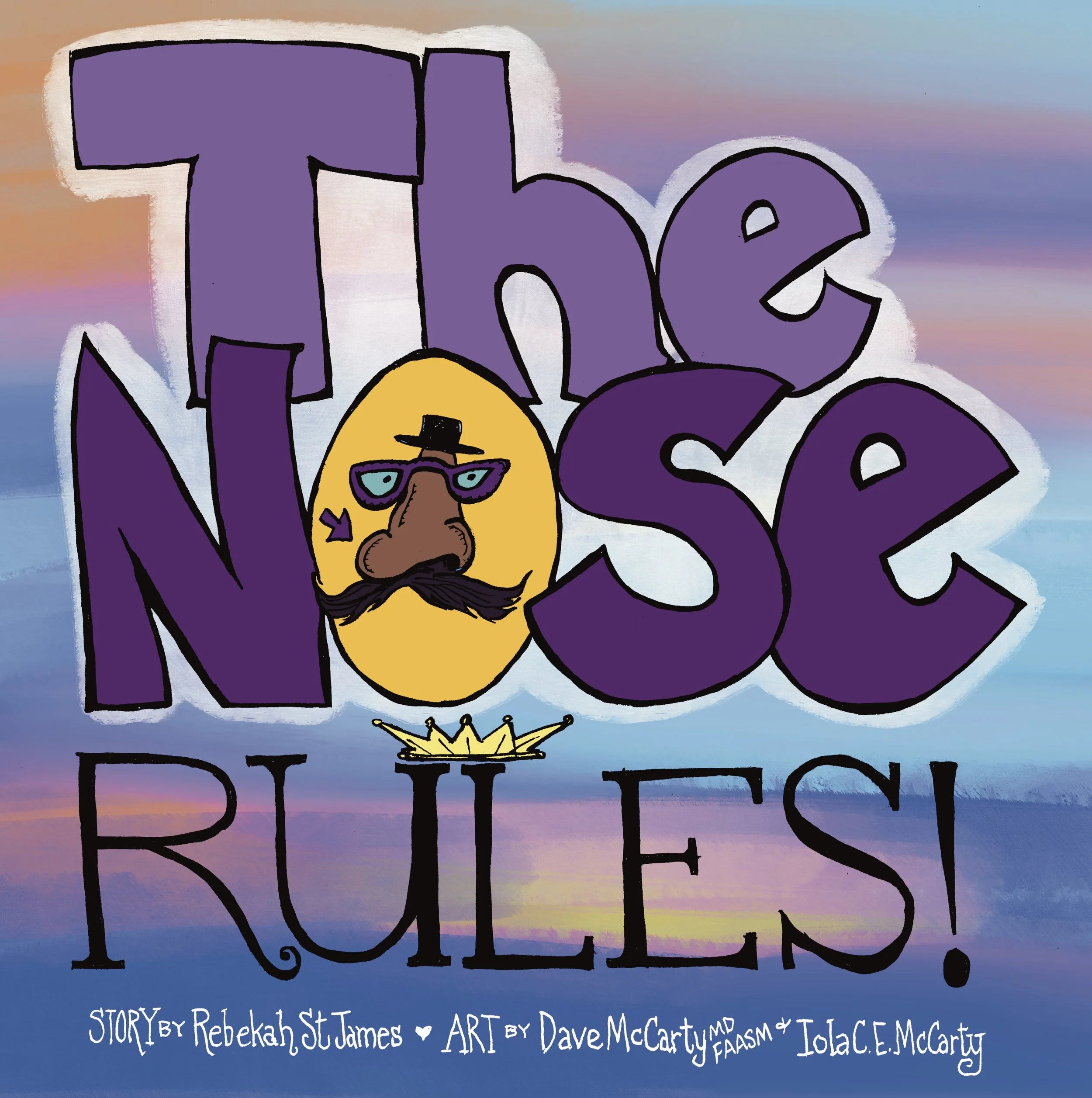
THE NOSE RULES! (2025). Written by Rebekah St. James, line art by David E. McCarty, and color art by Iola Cooper Elizabeth McCarty. Published by BookBaby.
~ ~ ~ ~ ~
REFERENCES
Rhee J, et al. Breaking social media fads and uncovering the safety and efficacy of mouth taping in patients with mouth breathing, sleep disordered breathing, or obstructive sleep apnea: a systematic review. PLoS One 2025;20:e0323643. doi:10.1371/journal.pone.0323643.
AlDomyati R, Alkhawaja Z, Alharthi Y, et al. An overview of mouth breathing syndrome and its effect on dental development. J Healthcare Sci 2023;3:84-89. doi:10.52533/JOHS.2023.30114.
Choi JE, Waddell JN, Lyons KM, Kieser JA. Intraoral pH and temperature during sleep with and without mouth breathing. J Oral Rehabil 2016;43:356-63. doi:10.1111/joor.12372.
Fan C, Guo L, Gu H, Huo Y, Lin H. Alterations in oral-nasal-pharyngeal microbiota and salivary proteins in mouth-breathing children. Front Microbiol 2020;11:575550. doi:10.3389/fmicb.2020.575550.
Hajishengallis G, Chavakis T. Local and systemic mechanisms linking periodontal disease and inflammatory comorbidities. Nat Rev Immunol 2021;21:426-40. doi:10.1038/s41577-020-00488-6.
Kimberly B, Nejadnik B, Giraud GD, Holden WE. Nasal contribution to exhaled nitric oxide at rest and during breathholding in humans. Am J Respir Crit Care Med 1996;153:829-36. doi:10.1164/ajrccm.153.2.8564139.
Lundberg JO. Nitric oxide and the paranasal sinuses. Anat Rec (Hoboken) 2008;291:1479-84. doi:10.1002/ar.20782.
Mew J. Facial changes in identical twins treated by different orthodontic techniques. World J Orthod 2007;8:174-88. PMID: 17580512.
Zheng W, Zhang X, Dong J, He J. Facial morphological characteristics of mouth breathers vs. nasal breathers: a systematic review and meta-analysis of lateral cephalometric data. Exp Ther Med 2020;19:3738-50.
Lin L, Zhao T, Qin D, Hua F, He H. The impact of mouth breathing on dentofacial development: a concise review. Front Public Health 2022;10:929165. doi:10.3389/fpubh.2022.929165.
Zhang J, Fu Y, Wang L, Wu G. Adenoid facies: a long-term vicious cycle of mouth breathing, adenoid hypertrophy, and atypical craniofacial development. Front Public Health 2024;12:1494517. doi:10.3389/fpubh.2024.1494517.
Huynh NT, Emami E, Helman JI, Chervin RD. Interactions between sleep disorders and oral diseases. Oral Dis 2014;20:236-45.
Becking BE, Verweij JP, Kalf-Scholte SM, Valkenburg C, Bakker EWP, van Merkesteyn JPR. Impact of adenotonsillectomy on the dentofacial development of obstructed children: a systematic review and meta-analysis. Eur J Orthod 2017;39:509-18. doi:10.1093/ejo/cjx005.
Meurice JC, Marc I, Carrier G, Series F. Effects of mouth opening on upper airway collapsibility in normal sleeping subjects. Am J Respir Crit Care Med 1996;153:255-9. doi:10.1164/ajrccm.153.1.8542125.
Fitzpatrick MF, McLean H, Urton AM, Tan A, O'Donnell D, Driver HS. Effect of nasal or oral breathing route on upper airway resistance during sleep. Eur Respir J 2003;22:827-32. doi:10.1183/09031936.03.00047903.
Yang H, Huyett P, Wang T, et al. Mouth closure and airflow in patients with obstructive sleep apnea: a nonrandomized clinical trial. JAMA Otolaryngol Head Neck Surg 2024;150:1012-19. doi:10.1001/jamaoto.2024.3319.
Mohammadi S, Hossein-Zadeh GA, Raoufy MR. Nasal and oral breathing modes reconfigure brain network dynamics between stabilizing integration and promoting fragmentation. Sci Rep 2026;16:15917. doi:10.1038/s41598-026-43617-2.
Citherlet T, Manferdelli G, Raberin A, Bourdillon N, Millet GP. Acute ventilatory and hemodynamic responses to nasal versus oral breathing during normoxia, hypoxia, and hypercapnia. Am J Physiol Heart Circ Physiol 2026;331:H1932-H1940. doi:10.1152/ajpheart.90182.2026.
Gold AR. Functional somatic syndromes, anxiety disorders and the upper airway: a matter of paradigms. Sleep Med Rev 2011;15:389-401. doi:10.1016/j.smrv.2010.11.004.
Suzuki M, et al. Relationship between oral flow patterns, nasal obstruction, and respiratory events during sleep. J Clin Sleep Med 2015;11:855-60. doi:10.5664/jcsm.4932.
Tanaka Y, Morikawa T, Honda Y. An assessment of nasal functions in control of breathing. J Appl Physiol (1985) 1988;65:1520-4. doi:10.1152/jappl.1988.65.4.1520.
Tanaka Y, Honda Y. Nasal obstruction as a cause of reduced PCO2 and disordered breathing during sleep. J Appl Physiol (1985) 1989;67:970-2. doi:10.1152/jappl.1989.67.3.970.
Edwards BA, Sands SA, Owens RL, et al. Effects of hyperoxia and hypoxia on the physiological traits responsible for obstructive sleep apnoea. J Physiol 2014;592:4523-35. doi:10.1113/jphysiol.2014.277210.
Xie A, Wong B, Phillipson EA, Slutsky AS, Bradley TD. Interaction of hyperventilation and arousal in the pathogenesis of idiopathic central sleep apnea. Am J Respir Crit Care Med 1994;150:489-95. doi:10.1164/ajrccm.150.2.8049835.